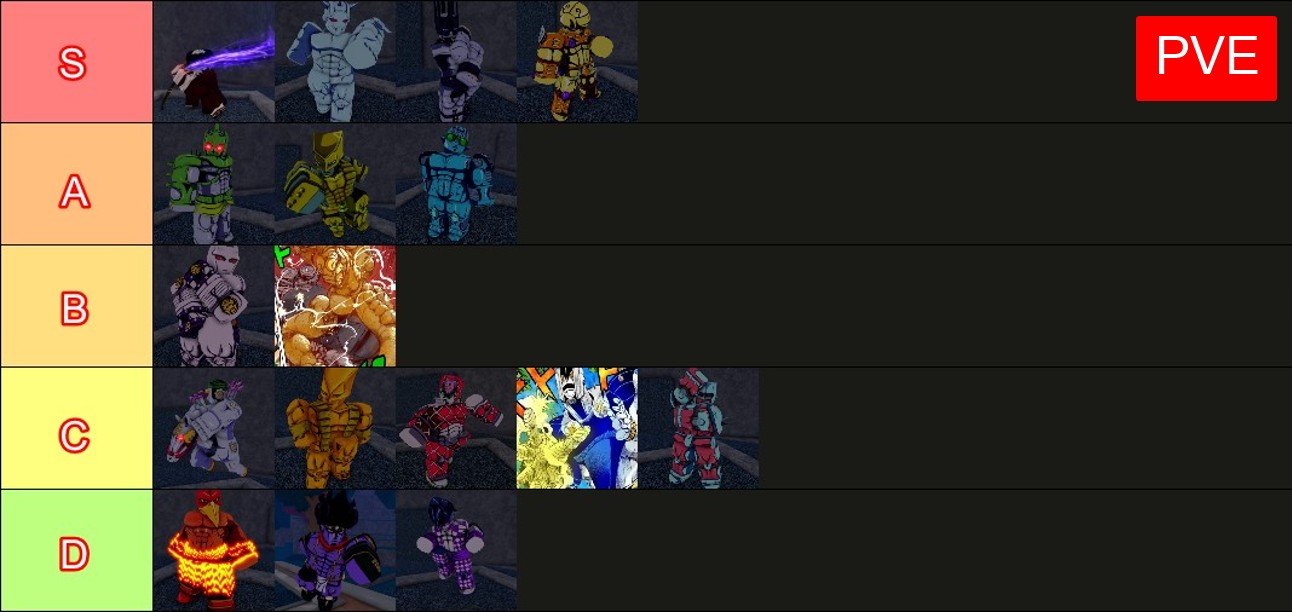

If you are searching for a Bizarre Lineage tier list, you are probably trying to figure out which bloodlines, abilities, or character builds are worth investing in. With so many options available, choosing the right lineage can make a major difference in how effectively you perform in battles, complete challenges, and progress through the game.
This guide breaks down the strongest choices into easy-to-understand tiers. Instead of focusing only on raw power, the ranking also considers versatility, usefulness in different situations, ease of use, combat potential, and overall value.
Whether you are a new player looking for a reliable starting option or an experienced player trying to optimize a competitive build, this bizarre lineage tier list can help you make a more informed decision.
What Is a Bizarre Lineage Tier List?
A tier list is a ranking system that places different game options into categories according to their overall effectiveness.
For this guide, the tiers can be understood as follows:
- S Tier: Exceptional options with outstanding overall performance.
- A Tier: Powerful and reliable choices that work well in most situations.
- B Tier: Solid options with good strengths but some noticeable limitations.
- C Tier: Average choices that can work but usually require more effort.
- D Tier: Situational or weaker options that may struggle compared with higher-ranked alternatives.
A tier list should not be treated as an absolute rule. Balance changes, player skill, preferred playstyle, and specific game modes can all influence how valuable a particular lineage becomes.
Bizarre Lineage Tier List at a Glance
For players who want a quick overview, the general ranking looks like this:
S Tier – Top-Tier Choices
S Tier represents the strongest and most versatile options. These choices generally provide excellent combat performance and remain useful across different situations.
They are particularly attractive for players who want consistency without having to build their entire strategy around a major weakness.
A Tier – Excellent Choices
A Tier lineages are very strong and can compete with S Tier options in the right hands. They may lack one particular advantage found among the absolute best choices, but their overall performance remains impressive.
For many players, an A Tier option can actually be more comfortable than an S Tier choice because of differences in playstyle.
B Tier – Reliable and Balanced
B Tier options are dependable. They may not dominate every encounter, but they can perform well when used correctly.
These choices are often suitable for players who are still learning the game or experimenting with different builds.
C Tier – Average Options
C Tier represents options that are usable but generally less efficient than higher-ranked alternatives.
They may have specific strengths, but their weaknesses can become more noticeable as players encounter stronger opponents.
D Tier – Low Priority Choices
D Tier options are generally the least competitive choices in the current ranking. They may still be enjoyable for casual play, experimentation, or challenge runs.
However, players focused primarily on efficiency may want to consider stronger alternatives.
How We Rank the Bizarre Lineage Options
Creating a useful Bizarre Lineage tier list requires more than simply looking at which option appears powerful at first glance.
Several factors should be considered.
Combat Strength
The most obvious factor is combat performance. A strong lineage should provide abilities that can help players deal damage, survive encounters, control opponents, or create useful openings.
Raw damage is important, but it is not everything. A lineage with slightly lower damage may still be more valuable if it provides superior utility.
Versatility
Versatility is another major consideration. The best options can adapt to different enemies, situations, and strategies.
A highly specialized lineage may be extremely powerful in one situation but ineffective elsewhere. A versatile choice can provide value throughout the game.
Ease of Use
Some abilities look impressive but require complicated timing or extensive practice.
An option that delivers strong results with relatively simple execution can be more useful to the average player than an extremely technical option with a higher theoretical ceiling.
Survivability
Offensive power is only one side of combat. Defensive abilities, mobility, recovery, and defensive utility can dramatically influence the effectiveness of a lineage.
Players who survive longer naturally have more opportunities to deal damage and control encounters.
Synergy With Other Abilities
A lineage should also be judged by how well it works alongside other abilities and builds.
Some combinations can cover weaknesses, increase damage potential, improve mobility, or provide better control over battles.
S Tier: The Best Choices
S Tier is reserved for lineages that consistently provide exceptional value.
These options are typically recommended for players who want strong performance without having to make significant compromises.
One of the biggest advantages of an S Tier choice is consistency. Rather than depending on a narrow situation, these lineages usually have multiple useful tools.
They can be effective in both offensive and defensive situations, making them attractive to experienced players and newcomers alike.
However, being placed in S Tier does not automatically mean that every player should use the same option. Personal preference still matters.
A player who understands an A Tier lineage extremely well may perform better with it than with an S Tier option they have never mastered.
A Tier: Powerful Alternatives
A Tier choices are excellent alternatives to the top-ranked options.
They often have strong damage potential, useful abilities, or valuable defensive tools. Their main difference from S Tier choices may be a specific limitation rather than a major weakness.
For example, an A Tier lineage might have excellent offensive potential but weaker defensive options. Another might provide impressive utility while requiring more precise execution.
This makes A Tier particularly interesting for players who enjoy specialized strategies.
Instead of choosing an option simply because it has the highest ranking, consider whether its strengths match your preferred approach to the game.
B Tier: Good Choices for Consistent Gameplay
B Tier is where you will find several dependable options.
These choices are usually capable of handling regular gameplay effectively, even if they do not provide the same advantages as the highest-ranked lineages.
B Tier can also be an excellent place for newer players to experiment.
Learning how abilities interact, understanding combat timing, and discovering personal preferences are all important parts of improving.
A balanced B Tier option can provide enough flexibility for players to learn without forcing them into an extremely specialized playstyle.
C Tier: Usable but Limited
C Tier options are not necessarily bad. Their lower ranking simply means that they face more competition from stronger alternatives.
A C Tier lineage might have an interesting ability or unique mechanic that makes it enjoyable despite its limitations.
These choices can be particularly appealing to players who value originality over maximum efficiency.
If you are playing casually, there is no reason to avoid a lower-tier option simply because a tier list ranks it below another choice.
Tier lists are designed to provide guidance, not dictate how everyone should play.
D Tier: Situational Picks
D Tier represents the options that currently struggle the most when compared with stronger alternatives.
They may have limited utility, weaker combat potential, or mechanics that are difficult to justify when better choices are available.
That said, low-tier does not necessarily mean useless.
Experienced players sometimes deliberately choose weaker options to create additional challenges or experiment with unconventional strategies.
For competitive progression, however, higher-tier choices are generally more efficient.

Best Lineage for New Players
New players should not necessarily select the highest-ranked option immediately.
Instead, look for a lineage that combines:
- Easy-to-understand abilities
- Good survivability
- Consistent damage
- Useful mobility
- Flexible combat options
- Straightforward mechanics
A beginner-friendly option allows you to focus on learning fundamental mechanics instead of constantly worrying about complicated ability rotations.
Once you understand the basics, you can experiment with more specialized choices.
Best Lineage for Experienced Players
Experienced players can benefit from choosing options that have a higher skill ceiling.
A technically demanding lineage may initially feel difficult, but mastering it can unlock considerably more strategic possibilities.
Advanced players should consider:
- Combo potential
- Ability timing
- Mobility
- Defensive options
- Matchup advantages
- Team synergy
- Long-term build potential
The ideal choice depends heavily on how you approach combat.
How to Choose the Right Lineage
Choosing the best lineage is ultimately a personal decision.
Start by identifying your preferred playstyle.
If you enjoy aggressive gameplay, prioritize offensive pressure and damage potential.
If you prefer defensive gameplay, look for survivability, mobility, and counterplay.
Players who enjoy tactical gameplay may prefer lineages with utility and multiple ways to approach an encounter.
It is also worth considering how much time you are willing to spend mastering an option.
A powerful but complicated lineage may not be the best choice if you want a simple and relaxing experience.
Why Tier Lists Can Change
A Bizarre Lineage tier list should never be considered permanent.
Game updates can introduce new mechanics, modify existing abilities, change statistics, or alter how different options interact.
A balance update can quickly turn an average lineage into a powerful choice.
Likewise, a previously dominant option can fall in popularity after receiving a major adjustment.
Community discoveries can also influence rankings. Players frequently discover new combinations and strategies that were not obvious when an ability was first introduced.
For that reason, always treat a tier list as a snapshot of the current gameplay environment rather than an unchanging rule.
Tier List vs Personal Skill
One of the most important things to remember is that player skill matters.
A high-tier lineage does not guarantee victory.
Understanding positioning, timing, movement, combos, defensive mechanics, and opponent behavior can be more important than the difference between two neighboring tiers.
A skilled player using a B Tier option can outperform an inexperienced player using an S Tier choice.
This is why experimentation is so valuable.
Try different options and see which mechanics feel natural.
Common Mistakes When Using a Tier List
Choosing Only Based on Tier
The highest-ranked option is not automatically the best option for every player.
Personal preference and experience should always be considered.
Ignoring Playstyle
An aggressive player may dislike a defensive lineage even if it is highly ranked.
Choose something that complements the way you actually enjoy playing.
Following Old Rankings
Tier lists can become outdated quickly after updates.
Always check whether the ranking reflects the current version of the game.
Ignoring Synergy
An individual lineage may appear average on its own but become significantly stronger when combined with the right abilities.
Look at the entire build rather than judging one element in isolation.
Frequently Asked Questions
What is the best choice in the Bizarre Lineage tier list?
The best choice depends on your preferred playstyle, current game balance, and experience level. S Tier options are generally the strongest overall, but an A or B Tier option may suit a particular player better.
Is an S Tier lineage always better?
Not necessarily. S Tier generally indicates excellent overall performance, but personal skill, strategy, and build synergy can make lower-ranked options highly effective.
Should beginners use an S Tier option?
Beginners can use S Tier options, but ease of use is also important. A simpler A or B Tier choice may provide a better learning experience.
Can a low-tier lineage still be useful?
Yes. Lower-tier options can still be effective in the right situation, especially when used by experienced players who understand their strengths and weaknesses.
How often should a Bizarre Lineage tier list be updated?
Ideally, rankings should be reviewed after significant balance updates, new content releases, or major discoveries within the player community.
Does player skill matter more than tier ranking?
In many situations, yes. Mechanical skill, game knowledge, timing, positioning, and understanding of matchups can have a major impact on performance.
Final Thoughts on the Bizarre Lineage Tier List
The Bizarre Lineage tier list is best used as a starting point rather than a strict rulebook. S Tier options may provide excellent overall performance, while A and B Tier choices can still be extremely effective when matched with the right player and strategy.
The most important factors are your playstyle, comfort level, preferred mechanics, and willingness to learn.
If you are new to the game, begin with an accessible and versatile option. As your experience improves, experiment with more technical or specialized choices. This approach will help you understand what makes each lineage effective instead of simply following a ranking.
Ultimately, the strongest lineage is often the one you understand best. Use tier lists to narrow down your choices, test different builds, and develop a strategy that fits the way you want to play.