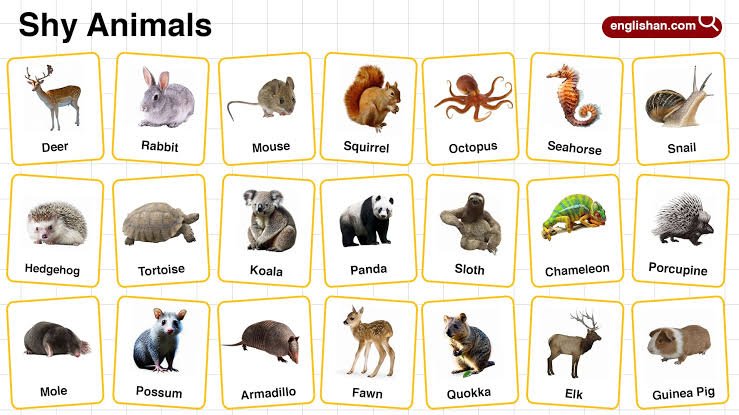

When people think about animals, they often imagine loud sounds such as birds singing, dogs barking, wolves howling, or lions roaring. Yet the animal kingdom also includes many species that spend most of their time in remarkable silence. These quiet animals have fascinating behaviors and lifestyles that allow them to survive without relying heavily on loud sounds.
Some quiet animals are naturally shy and avoid attention, while others communicate through body language, scent, touch, or subtle sounds. Their peaceful behavior can be especially interesting for people who enjoy wildlife, nature, and calm environments.
From slow-moving sloths to gentle rabbits and enormous giraffes, there are many animals that demonstrate that being quiet can be an important part of survival.
What Are Quiet Animals?
Quiet animals are species that generally make little noticeable noise during their everyday activities. This does not mean they are completely silent. Almost every animal has some way of communicating, but some species rarely produce sounds that humans can easily hear.
Animals may communicate through movement, facial expressions, body posture, scent, vibrations, or soft vocalizations. In many cases, staying quiet can help an animal avoid predators or approach prey without being detected.
The following examples are some of the most interesting quiet animals found around the world.
1. Giraffes
Giraffes are famous for their extraordinary height, long necks, and peaceful behavior. Despite their impressive size, they are generally quiet animals.
Much of a giraffe’s day is spent browsing leaves from trees. They move slowly across grasslands and woodlands and usually do not make loud noises while feeding or walking.
Giraffes are capable of communicating through different sounds and behaviors. They can produce low-frequency vocalizations, and researchers have observed humming and other subtle forms of communication. However, their everyday behavior is usually much quieter than that of many other large African mammals.
Their calm lifestyle makes giraffes one of the most recognizable examples of quiet wildlife.
2. Rabbits
Rabbits are small, gentle animals that are usually very quiet. Whether living in the wild or kept as pets, rabbits often communicate through body language instead of loud vocalizations.
Their ears are particularly important for communication. A rabbit may change the position of its ears when it feels relaxed, curious, or threatened.
Rabbits can make noises such as grunts, squeaks, and teeth grinding, but these sounds are generally not frequent. When they sense danger, they may remain still rather than immediately making noise.
Their quiet behavior is useful in the wild because rabbits are prey animals. Avoiding unnecessary noise can help them stay unnoticed by predators.
3. Sloths
Sloths are perhaps some of the best-known quiet animals in the world. Their slow movements, relaxed lifestyle, and tree-dwelling habits make them naturally unobtrusive.
They spend much of their lives hanging from branches and feeding on leaves. Because sloths move slowly and spend considerable time resting, they rarely create much noise.
Young sloths may produce soft sounds to communicate with their mothers. Adults, however, are generally quiet.
Their slow lifestyle also helps them conserve energy. Rather than constantly moving or communicating, sloths spend long periods resting and feeding.
4. Turtles
Turtles are another group of animals known for their quiet behavior. Land turtles can slowly travel through forests, grasslands, and gardens without producing much noticeable sound.
Sea turtles are even more difficult to hear because they spend much of their lives underwater. They glide through oceans with smooth movements and generally do not create the kinds of loud noises associated with many land animals.
Although some turtle species can make sounds, their communication is often subtle. Their quiet nature allows them to move through their environment without attracting unnecessary attention.
5. Deer
Deer are generally peaceful and relatively quiet animals. They can be found in forests, grasslands, mountains, and other natural habitats around the world.
A deer walking through a forest may move almost silently, particularly when it is being cautious. This ability can be useful because deer are commonly hunted by predators.
Deer do communicate with one another. They can use body movements, scent markings, and various vocalizations. Fawns may make soft sounds to communicate with their mothers, while adults can produce warning calls.
Nevertheless, compared with many other mammals, deer often spend long periods moving and feeding quietly.
6. Elephants
Elephants may seem like an unusual choice because they are capable of producing powerful sounds. However, they can also be remarkably quiet when moving through their natural environment.
An elephant herd can travel through forests with surprising stealth considering the animals’ enormous size. Their padded feet help reduce the noise created by their movements.
Elephants also use low-frequency sounds that can travel over long distances. Some of these sounds are difficult for humans to hear clearly.
Their communication system is highly developed, involving vocalizations, physical contact, body movements, and chemical signals. So while elephants are certainly capable of being loud, many aspects of their communication are subtle.
7. Cats
Domestic cats are often quiet animals, especially when compared with dogs. A cat can move around a home with almost no noticeable sound.
Their soft paws allow them to walk quietly, which is particularly useful for hunting. In the wild, cats need to approach prey without revealing their location.
Cats do communicate through meowing, purring, hissing, growling, and body language. However, their behavior varies considerably from one individual to another.
Wild cats such as leopards are also known for their stealth. Their ability to move quietly is an important part of their hunting strategy.
8. Snakes
Snakes are among the quietest animals because they do not have external limbs that create footsteps. Their unique method of movement allows them to travel across many surfaces without producing much sound.
Most snakes rely heavily on other forms of communication and environmental sensing rather than loud vocalizations. Their forked tongues help them collect chemical information from the environment, while specialized organs allow them to detect important signals.
Some snake species can hiss when threatened. However, outside defensive situations, many snakes are remarkably quiet.
Their silent movement can also make them effective predators. A snake can approach prey without the sound of footsteps.
9. Butterflies
Butterflies are tiny, delicate insects that make very little noise. Their wings may produce a faint fluttering sound, but they are generally almost silent to human ears.
Butterflies spend much of their time flying from flower to flower, feeding on nectar, and searching for suitable places to reproduce.
Instead of depending on loud sounds, butterflies use visual signals, chemical cues, and physical interactions. Their colorful wings can also play an important role in communication and protection.
Because they are so quiet, butterflies can easily move through gardens and natural habitats without attracting much attention.
10. Fish
Fish are another broad group of animals that humans often perceive as silent. Underwater environments can actually be filled with animal sounds, but many fish produce sounds that people cannot hear without specialized equipment.
Fish use various methods to communicate, including body movements, vibrations, coloration, and chemical signals. Some species are capable of producing clicks, grunts, or other underwater sounds.
For someone watching fish in an aquarium, however, their movements appear almost completely silent. They glide through the water without footsteps, barking, or other familiar terrestrial sounds.
Why Are Some Animals So Quiet?
There are several reasons why an animal may have a quiet lifestyle.
Avoiding Predators
For prey animals, unnecessary noise can reveal their location. Remaining quiet gives them a better chance of avoiding predators.
Rabbits and deer, for example, often rely on alertness and subtle communication rather than constant loud calls.
Hunting
Predators can also benefit from silence. Cats, snakes, and other hunters may move quietly to avoid alerting potential prey.
Stealth allows a predator to get closer before making its final move.
Conserving Energy
Some animals have low-energy lifestyles and do not need constant movement or communication. Sloths are a good example.
Their slow metabolism and relaxed behavior allow them to survive while spending relatively little energy.
Alternative Communication
Not every animal needs loud sounds to communicate. Some species rely on scent, touch, posture, color, or vibrations.
These communication methods can be just as effective as vocal sounds in the right environment.
Quiet Animals and Their Natural Habitats
Quiet animals can be found almost everywhere. Forests contain deer, snakes, cats, and sloths. Grasslands are home to giraffes and other peaceful species. Oceans contain turtles and fish, while gardens can attract butterflies and rabbits.
Their environments often influence how they communicate. Animals living in dense forests may use scent or low-frequency sounds, while animals in open landscapes may benefit from signals that travel farther.
Water also changes how sound moves, which is why marine animals can have communication systems that are very different from those of land animals.
Lesen Sie auch: plenary authority
Are Quiet Animals Completely Silent?
No. The term “quiet animals” does not mean an animal never makes a sound.
Many animals that appear silent to humans are actually capable of producing sounds. Some sounds may be extremely soft, while others may occur only during specific situations such as mating, danger, feeding, or communication between parents and young.
In addition, humans cannot hear every frequency that animals can produce. Some species communicate using sounds outside the normal human hearing range.
Therefore, it is more accurate to describe these animals as relatively quiet rather than completely silent.
Why People Find Quiet Animals Fascinating
Quiet animals can be particularly interesting because their behavior encourages people to observe rather than simply listen. Watching a deer carefully move through a forest or a butterfly land on a flower can provide a peaceful wildlife experience.
These animals also demonstrate how different survival strategies can be. Nature does not always reward the loudest or strongest creature. Sometimes stealth, patience, and careful movement are more valuable.
Quiet species remind us that communication in the animal kingdom is much more complex than simple sounds.
Final Thoughts
The world is full of fascinating quiet animals, from gentle rabbits and graceful giraffes to stealthy cats, slow-moving sloths, and delicate butterflies. Although many of these animals can make sounds, they generally spend much of their lives without producing loud or frequent noise.
Their quiet lifestyles can help them avoid predators, hunt successfully, conserve energy, and communicate in subtle ways. Learning about these animals gives us a better understanding of the incredible variety of survival strategies found in nature.
Whether you are interested in wildlife, animal behavior, or simply peaceful creatures, quiet animals offer a fascinating reminder that nature can be just as impressive in silence as it is in sound.
Frequently Asked Questions About Quiet Animals
What is the quietest animal?
There is no single animal that can officially be called the world’s quietest. However, animals such as butterflies, sloths, rabbits, turtles, and many fish are generally very quiet from a human perspective.
Are giraffes quiet animals?
Yes. Giraffes are generally considered quiet animals. They can communicate through sounds and other behaviors, but they usually spend much of their time feeding and moving without making loud noises.
Why are rabbits so quiet?
Rabbits are prey animals, so staying quiet can help them avoid attracting predators. They also use body language and subtle sounds to communicate.
Do quiet animals make sounds?
Yes. Quiet animals are not necessarily completely silent. Many produce sounds during particular situations, including mating, danger, feeding, or communication between parents and young.
Are cats quiet animals?
Cats are generally relatively quiet animals. Their soft paws allow them to move silently, which is especially useful when hunting.
Can animals communicate without making sounds?
Yes. Animals can communicate through body language, scent, touch, coloration, vibrations, and chemical signals. These methods are important for many species.